Discord, Gaming & Growth · 2023
Temporary Guest Invites
Proved guests would convert with a validating experiment, then shipped account-free voice joins in two weeks.
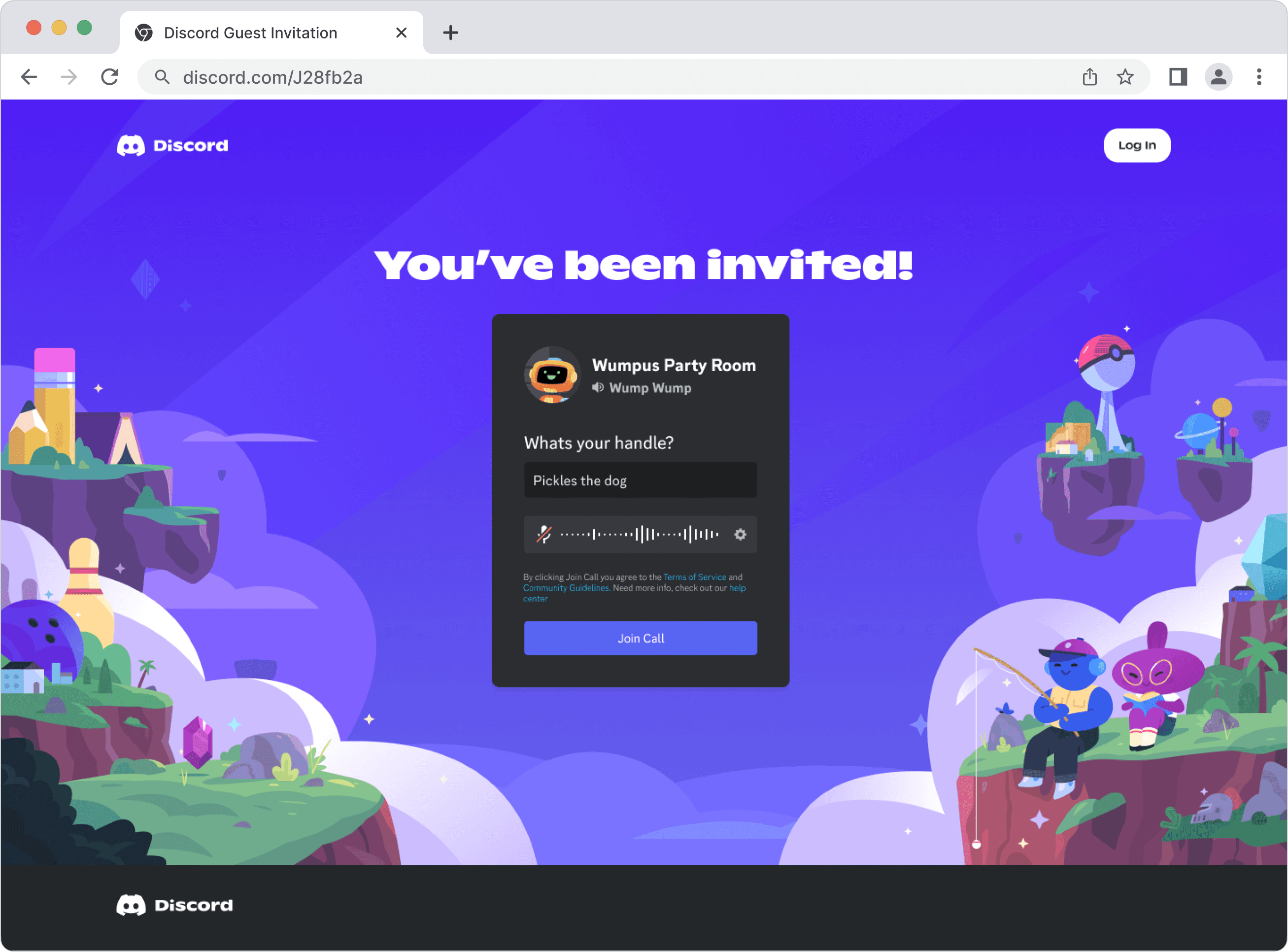
- Owned
- The guest experience end to end: invite, in-call behavior, and post-call account claim.
- Influenced
- The investment case itself, generated with a near-zero-cost experiment before any engineering work was funded.
+2.9%
long term user engagement
In servers where guests initially joined without an account.
100,000+
guest invitations sent
Within the 1 week initial test window.
~2 weeks
from concept to ship
Including the experiment that justified the investment.
Context
Many people first encounter Discord through a link from friends, but registration, finding their friend, and joining their server often stood between them and the call they were invited to. For in-game contexts with only seconds to spare, we lost a lot of potential users to complex joining. This project focused on joining a call without account creation: the classic "try before you buy" gap in our onboarding.
Framing
After catching this issue while reviewing onboarding funnel traffic, I looked for the cheapest test of the problem space. Discord already had a buried form of guest access: a "grant temporary membership" setting that was hidden and granted broad server access rather than just the relevant call.
Partnering with engineering, we tested a quick swap: move that toggle to a prominent, on-by-default position for server owners. Usage jumping when a hidden setting is surfaced is expected and proves little but we still saw an over 2600% increase. The signal that mattered was not that people joined, it was that servers in the experiment saw +2.6% engagement after 24 hours, and temporary members were among the most engaged audiences on the surface. That validated my hypothesis and got funding to further invest in improving the guest experience.
Decisions
Design the join experience around getting in quickly, not mirroring video-call norms
Instead of: Following the Zoom and Teams pattern of a video-first waiting room
Benchmarking Zoom, Meet and Teams pointed one way; Discord's unique position pointed another. Discord users rarely turn on video, especially when new to the platform, and the guest's goal is to be in the conversation quickly. I mapped the journey for both inviters and invitees before visual design, then optimized for one number: seconds from tapping the link to speaking.
Prompt account creation after they're hooked, not up front
Instead of: Requiring registration at the moment of highest intent, before joiningshipped
Registration-first was how we'd always done things but it didn't match our goal of quick joining. The guest had been invited to an active conversation, not to a signup form. Sequencing account claim after the call meant the product spoke for itself before we ask for registration, and the post-call screen could be clear about what you're signing up for.
ResultGuests experienced Discord with their friends first, chatting and learning. The account claim came after they were already sold and looking to stick around.
Repurposing existing behaviors to test and ship quickly
Instead of: Designing bespoke guest surfaces for a more polished first release
The flow reused pieces from registration and server settings wherever possible, adding new behaviors only where nothing existed, like the lightweight voice tester. The tradeoff let us move quickly and get a less polished experience out to validate before investing deeply. I took this approach because it was more important to answer our open question of whether guests converted, not if the flow could be prettier.
ResultThe squad moved from direction to ship in roughly two weeks, inclusive of our first experiment timing.
Outcomes
+2.9%
channel engagement
On top of the +2.6% signal from the toggle experiment.
100,000+
guest invitations
In the initial launch window.
~2 weeks
direction to ship
Evidence first, investment second, build fast.
Rethinking a long-standing funnel to bring together gaming and growth was a change for how we'd thought about the gaming team's role until now.
I presented my thinking and approach in a design all-hands and influenced how the growth team explored new opportunities. This change was reflected in future experiments that shipped to improve existing feature sets and future optimize Discord Nitro.
Reflection
The most valuable design work on this project happened before any screens existed: finding the one-toggle experiment that made the investment case for everything after it. A cheap experiment was way better than a big presentation deck and lots of concepting, and the fastest way to fund good UX is to prove the behavior is wanted by users.